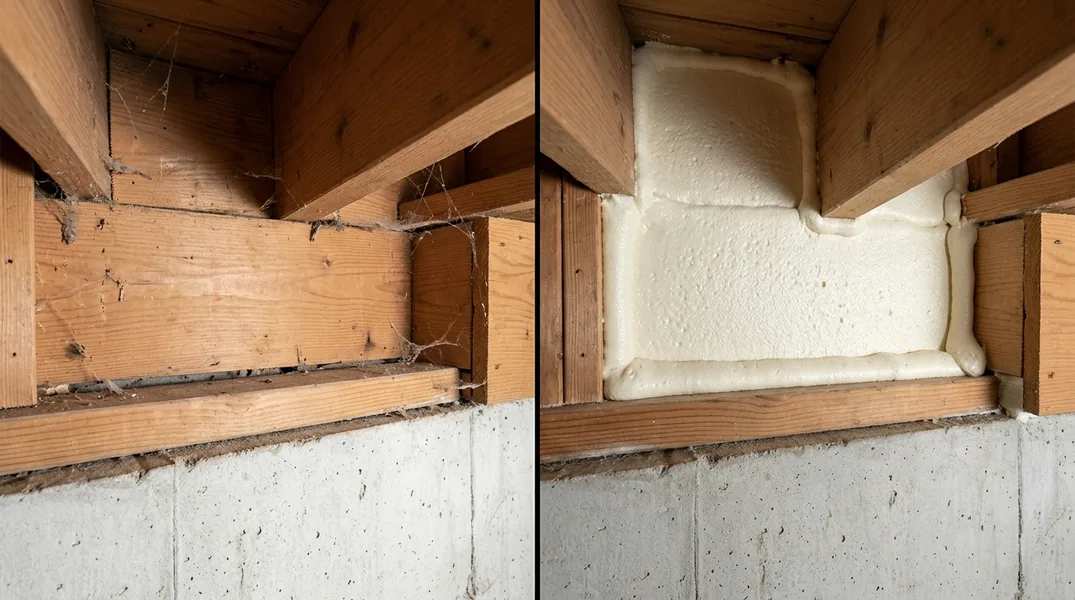
Understanding Climate Zone 5A and Why It Matters for Lincoln Basements
If you own a home in Lincoln, you live in Climate Zone 5A, a region that experiences significant temperature swings and moisture challenges throughout the year. This climate classification means your home faces winters cold enough to freeze pipes, summers warm enough to drive humidity deep into your foundation, and spring thaws that can introduce water into crawl spaces and basements. Understanding this climate reality is the first step toward protecting your home's foundation and the spaces beneath it.
The rim joist, also called the band board, is the wooden framing that sits on top of your foundation wall and connects your basement or crawl space to the walls above. In Climate Zone 5A, this area becomes a thermal weak point. Cold air seeps through gaps and cracks in the rim joist during winter, making your basement feel frigid and forcing your heating system to work overtime. Meanwhile, warm, humid air finds its way into crawl spaces during summer, creating the perfect conditions for mold growth and wood rot. Without proper insulation, your rim joist becomes a direct pathway for energy loss and moisture infiltration, two problems that compound over time.
Why Crawl Space Spray Foam Outperforms Traditional Insulation Methods
Closed Cell Spray Foam Insulation has become the gold standard for rim joist and crawl space insulation in Climate Zone 5A for good reason. Unlike fiberglass batts or mineral wool, spray foam expands to fill every cavity, crack, and gap around the rim joist. This complete seal prevents both air infiltration and moisture vapor from passing through, which is critical in a climate that experiences both extreme cold and seasonal humidity swings. Fiberglass insulation, by comparison, leaves small air pockets and doesn't create a moisture barrier, meaning it can actually absorb water during humid months and lose its insulating value.
The structural integrity of closed cell foam also matters in Lincoln basements. The foam hardens into a rigid shell that reinforces the rim joist area and can actually add rigidity to the foundation structure itself. This is particularly valuable in older homes or those with pier and beam foundations, where settling and movement over decades can create new gaps and cracks. When you choose Closed Cell Spray Foam Insulation, you're not just adding insulation; you're creating a durable, long-lasting thermal and moisture barrier that will protect your home for decades.
Crawl Space Insulation and Pier and Beam Foundation Challenges
Homes built on pier and beam foundations, common in certain parts of Lincoln, face unique insulation challenges. With the living space suspended above the ground rather than built on a concrete slab, the underside of the home is directly exposed to outdoor air temperatures and ground moisture. This design makes the rim joist and crawl space insulation absolutely critical. A poorly insulated crawl space under a pier and beam home can result in cold floors year-round, especially in bedrooms and bathrooms where comfort matters most. The best insulation for crawl space applications must address both the thermal performance and the moisture control that pier and beam homes demand.
The ground beneath a crawl space in Climate Zone 5A can remain cold well into spring and cool down quickly in fall. Moisture from the soil naturally rises through the foundation and into the crawl space, especially after heavy rains or snowmelt. Without proper vapor barriers and insulation, this moisture travels upward into the rim joist and can eventually reach the wooden framing of your home's walls. Spray foam insulation creates an impermeable seal that stops this moisture migration before it starts. When combined with proper drainage and ventilation planning, Closed Cell Spray Foam Insulation provides comprehensive protection for pier and beam foundations in our climate.
Cold Floors Insulation: How Rim Joist Foam Eliminates the Problem
One of the most common complaints from homeowners in Lincoln is cold floors, particularly in basements and rooms directly above crawl spaces. This discomfort is almost always caused by inadequate rim joist insulation. Heat from your living space radiates downward and escapes through the uninsulated rim joist area into the crawl space or basement below. The ground temperature in Climate Zone 5A remains in the 40s to 50s Fahrenheit for much of the year, creating a constant thermal pull on your home's interior. If your rim joist isn't properly sealed and insulated, you're essentially heating the crawl space and the earth beneath your home rather than maintaining warmth in your living areas.
Spray foam insulation at the rim joist creates a thermal break that stops this heat loss. By insulating the band board and the area where the rim joist meets the foundation wall, you eliminate the primary pathway for energy escape. Homeowners report noticeably warmer floors within days of having spray foam applied. This warmth improvement is especially dramatic in basements finished as living spaces or in homes with radiant floor heating systems. The result isn't just comfort; it's measurable energy savings. When your heating system doesn't have to compensate for rim joist heat loss, your utility bills drop, and your HVAC equipment runs less frequently, extending its lifespan.
Moisture Control and Mold Prevention in Climate Zone 5A Crawl Spaces
In a climate like ours, moisture management is as important as thermal insulation. Climate Zone 5A experiences significant seasonal humidity swings, with spring and early summer bringing high moisture levels to the air and ground. Crawl spaces and basements are naturally humid environments because they're in direct contact with soil. Without proper insulation and vapor barriers, moisture condenses on cold surfaces, particularly on the rim joist and wooden framing. This condensation creates the ideal environment for mold, mildew, and wood-destroying fungi. Over time, untreated moisture damage can compromise the structural integrity of your home's foundation and framing.
Closed Cell Spray Foam Insulation acts as a vapor barrier while simultaneously insulating. By keeping the rim joist and surrounding framing warmer, the foam reduces the temperature differential that causes condensation. The closed cell structure itself is impermeable to moisture vapor, preventing ground moisture from traveling upward into your home's structure. This dual action makes spray foam the best insulation for crawl space moisture control. When you invest in proper rim joist foam insulation, you're preventing mold problems before they start, protecting your home's health and your family's wellbeing.
Rim Joist Foam Insulation Cost in Lincoln: What to Budget
The pricing for rim joist spray foam insulation varies based on the linear footage of your rim joist, the thickness of foam required for Climate Zone 5A compliance, and the complexity of your foundation layout. Most homeowners in Lincoln can expect to invest between $1,500 and $4,000 for complete rim joist insulation in a typical single-family home. While this might seem like a significant upfront cost, the energy savings typically recoup the investment within five to seven years, and the durability of spray foam means it will protect your home for 30+ years. Unlike fiberglass insulation that degrades over time, spray foam doesn't settle, compress, or lose its R-value, making it a genuinely long-term investment.
When evaluating pricing from different contractors, remember that the cheapest option isn't always the best value. Professional installation ensures complete coverage, proper foam thickness, and compliance with building codes. Lincoln Spray Foam Insulation offers transparent pricing and a free estimate process that lets you understand exactly what you're paying for before any work begins. Contact us at (531) 229-1733 to discuss your specific crawl space or rim joist insulation needs and receive a detailed quote tailored to your home's requirements.
Looking for a professional spray foam insulation contractor in Lincoln? Lincoln Spray Foam Insulation responds fast for all your spray foam insulation needs.
Get a Free Quote