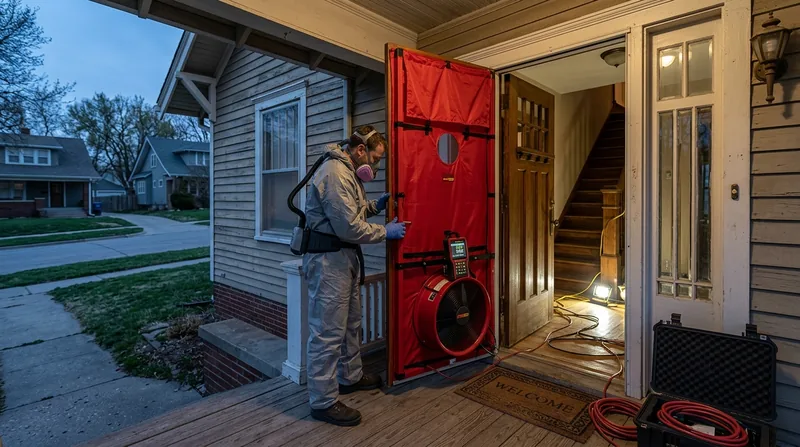




Air sealing in Lincoln stops the cold drafts that slip through gaps around top plates, rim joists, and penetrations in homes across Lancaster County. Lincoln's windy winters push uncontrolled air straight into living spaces through these leaks, driving up heating bills and creating uncomfortable temperature swings. We run a blower door test to measure how much air is moving through your envelope, then seal those gaps with spray foam to cut ACH50 numbers and restore comfort. Most homes built before 1990 have never had their air barriers tested or sealed, which means energy dollars are escaping through holes you cannot see. Whether you live in a Havelock bungalow, a mid-century ranch, or a newer subdivision on Lincoln's south edge, air sealing cuts both your winter heating costs and your summer cooling load. We handle air sealing alongside attic spray foam insulation and rim joist sealing as part of a complete envelope strategy.
Why Air Sealing Matters in Lincoln's Cold Climate
Lincoln sits in IECC climate zone 5A, where winter winds cut through the plains and temperatures drop well below freezing for months at a time. Air leaks around top plates, electrical outlets, and ductwork penetrations let that cold wind bypass your insulation entirely, because insulation only works when air cannot move through it. A home with poor air sealing can lose as much heat through infiltration as it gains from insulation, which is why blower door testing reveals the real picture of your envelope performance. Older homes in neighborhoods like the Near South, Country Club, and Havelock were built without air barriers or with barriers that have degraded over decades. Newer subdivisions on the south and east edges of town often have better envelope design, but gaps around HVAC chases, plumbing stacks, and recessed lighting still leak cold air into conditioned space.
- A blower door test measures air leakage in ACH50 (air changes per hour at 50 pascals) and shows exactly where cold air enters.
- Spray foam seals gaps around electrical boxes, plumbing penetrations, and top plates that fiberglass batts cannot reach.
- Sealed rim joists and band joists stop the stack effect that pulls cold air up from basement walls into living spaces.
- Sealing ducts and return air plenums prevents conditioned air from escaping into unconditioned spaces like garages and attics.
Once you know where the leaks are, air sealing becomes a high-return investment that cuts your winter heating bills and improves comfort year-round.
Key info: A home in Lincoln with an ACH50 above 7 is losing heated air constantly through gaps and cracks. Sealing those gaps to bring ACH50 below 5 cuts your winter heating load by 15 to 25 percent, which on a 2,000-square-foot home translates to real money saved every month from November through March.
For more detail on how we approach air sealing as part of a larger insulation strategy, see our attic spray foam insulation page and our closed cell spray foam service, which often work together in the same project.
Visit the City of Lincoln Building and Safety Division to confirm any air sealing or insulation work that may require a permit at your address.
How We Seal Air Leaks in Lincoln Homes
Air sealing starts with a blower door test that pressurizes your home and reveals where air is escaping. We walk the house with a thermal imaging camera to spot cold spots around top plates, rim joists, and penetrations, then mark the gaps that need sealing. Most of the leaks are in the attic, basement rim, and around ductwork, so we focus on those zones first. Once we have mapped the leaks, we use spray foam to seal around electrical boxes, plumbing stacks, and rim joists, then caulk or foam smaller gaps in drywall seams and wall plates. The goal is to bring your ACH50 number down to a level that cuts drafts and heating costs without making the house too tight for natural ventilation.
- We perform a blower door test to measure baseline air leakage and identify the biggest problem areas in your home.
- Thermal imaging pinpoints cold spots and air pathways that would be invisible to the naked eye.
- We seal rim joists and band joists with closed cell spray foam to stop the stack effect and ground moisture entry.
- We foam around top plates, electrical boxes, and HVAC chases to break the air pathway from basement to attic.
- We caulk or foam ductwork penetrations and return air plenums to keep conditioned air inside the living space.
- A final blower door test confirms the improvement and shows you the real savings in ACH50 reduction.
The whole process takes one to two days depending on home size and complexity, and the result is a measurable drop in air leakage that you will feel in comfort and see in your heating bills.
Example: A 1960s ranch in Havelock with a basement rim joist that has never been sealed will show an ACH50 of 8 to 10 before sealing. After we foam the rim joist, seal the top plate, and caulk the ductwork, the same house drops to an ACH50 of 4 to 5, which cuts the winter heating load by 20 to 30 percent on that home.
Learn more about the spray foam products we use for air sealing by visiting our open cell spray foam page, which covers the low-pressure, flexible option often used in retrofit air sealing work.
Air Sealing Methods and Approaches
| Approach | Description | Best for |
|---|---|---|
| Blower Door Testing | Pressurizes the home to measure ACH50 and identify air leakage pathways with thermal imaging guidance. | Baseline assessment and final verification of sealing effectiveness on any air sealing project. |
| Rim Joist and Band Joist Sealing | Closed cell spray foam applied to the perimeter band where the rim sits on the foundation, stopping cold air from entering the basement rim cavity. | Basement rim joists in older homes across Lancaster County where cold drafts pull air into living spaces above the basement. |
| Top Plate and Attic Sealing | Spray foam around electrical boxes, plumbing stacks, and the top plate perimeter in the attic to seal the air barrier between conditioned and unconditioned space. | Attics in Havelock bungalows, mid-century ranches, and newer subdivisions where the attic-to-living-space interface leaks cold or hot air. |
| Ductwork and HVAC Penetration Sealing | Foam applied around supply and return ducts, refrigerant lines, and furnace chases to prevent conditioned air from escaping into unconditioned zones like garages or crawl spaces. | Homes with ducts routed through basements, garages, or attics where air loss directly raises heating and cooling costs. |
| Caulking and Detail Sealing | Caulk or low-pressure foam applied to drywall seams, outlet boxes, and small gaps that spray foam alone cannot reach effectively. | Finishing work after major foam sealing to capture remaining small leaks and achieve the lowest possible ACH50 reading. |
Each method targets a specific air pathway, and the best air sealing projects combine two or three approaches to address the dominant leaks in your home's envelope.
Air Sealing Cost in Lincoln: What to Expect
Air sealing cost in Lincoln starts at around $650 for a blower door test plus sealing of the most critical air pathways, such as the rim joist or top plate in a single zone. Most homes benefit from a complete air sealing project that includes testing, rim joist sealing, attic top plate work, and ductwork penetration sealing, which typically runs $1,500 to $3,500 depending on home size and complexity. A small ranch in Havelock or a newer subdivision home may fall on the lower end of that range, while a two-story home with a finished basement and multiple ductwork chases may run higher. The cost also depends on how many leaks exist, how easy they are to access, and whether you combine air sealing with attic spray foam insulation or rim joist foam in the same project.
Factors that move the cost up include larger home size, complex ductwork layouts, multiple stories, and the need to seal areas that are difficult to access such as between joists or in tight crawl spaces. If your home has extensive air leakage and multiple problem zones, the cost may run higher, but the payback in reduced heating and cooling bills over five to ten years justifies the investment. We always provide a written estimate with R-value and thickness specifications so you know exactly what you are paying for and what the result will be.
The best way to understand the cost for your specific home is to call us at (531) 229-1733 for a free estimate. We will run a blower door test, identify the leaks, and give you a firm price based on what your home actually needs, not a generic per-square-foot rate that ignores your real air leakage problem.
For a detailed breakdown of pricing across all our services, see our full pricing page.
What to Look for When Hiring an Air Sealing Contractor Near Lincoln
Hiring the right spray foam and air sealing contractor near me in Lincoln means checking three things: whether the company carries full insurance and can prove it, whether the estimate includes R-value and thickness specifications for any foam work, and whether the contractor actually performs a blower door test or just guesses at the problem. A contractor who shows up without testing equipment and quotes a price on the spot without understanding your home's actual air leakage is cutting corners, and you will pay for it later when the job does not deliver the promised comfort or savings. The best contractors in Lancaster County, Saunders County, and Cass County will give you a free estimate, explain what a blower door test shows, and provide a written scope that details every area to be sealed.
- Ask whether the contractor carries full insurance and request a certificate of insurance before any work starts.
- Require a written estimate that names the specific areas to be sealed and lists R-value and foam thickness if spray foam is involved.
- Verify that the contractor will perform a blower door test before and after the work to prove the improvement in ACH50.
- Check references from homes in your neighborhood or similar homes in Lincoln to confirm the contractor has solved real air leakage problems.
- Ask about the contractor's plan for mechanical ventilation during spray foam cure and the re-entry window before the home is safe to occupy.
- Confirm that the contractor understands which work requires a permit at your address by checking with the City of Lincoln Building and Safety Division.
The local independent contractor with a Lincoln address and local plates is often the best choice because we know the building stock, the local code requirements, and the specific climate challenges that drive air leakage in this region.
Ready to get started? Contact us for a free air sealing estimate, and we will run a blower door test to show you exactly where your home is leaking and how much it will cost to seal.
Air Sealing in Lincoln: Pricing Guide
| Service | Price | Details |
|---|---|---|
| Blower Door Test and Top Plate Sealing | Starting at $650 | Includes baseline ACH50 test, thermal imaging, and foam sealing of attic top plate and electrical penetrations |
| Rim Joist and Band Joist Sealing | Starting at $800 | Closed cell spray foam applied to basement rim cavity, includes test and verification of improved ACH50 reduction |
| Complete Home Air Sealing | Starting at $1,500 | Blower door testing, rim joist sealing, attic top plate work, ductwork penetration sealing, and final ACH50 verification |
| Air Sealing with Spray Foam Insulation | On estimate | Combined air sealing and attic or rim joist spray foam insulation, priced based on square footage and R-value target |
| Travel and Estimate | Included within Lincoln area | No separate mileage fee or travel charge for homes in Lancaster County and surrounding service areas |
| Free Estimate | No obligation | Response within 24 hours at (531) 229-1733 with blower door testing and written price recommendation |
Indicative pricing, the exact cost depends on square footage, finish, and site access. Free personalized estimate within 24h at (531) 229-1733.


