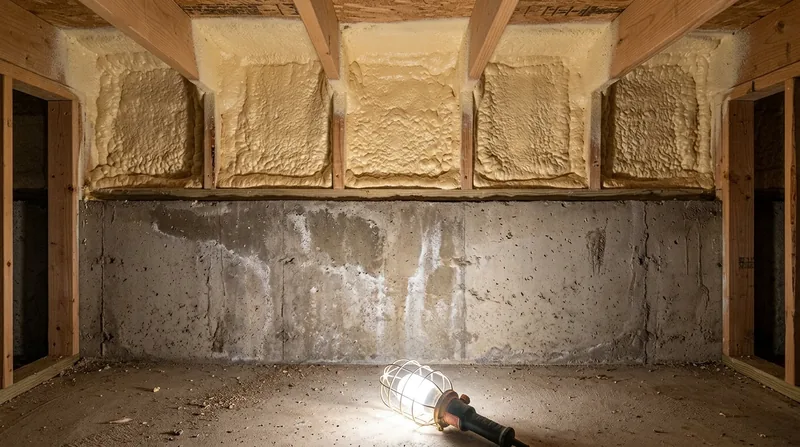




Closed cell spray foam insulation in Lincoln handles the moisture and temperature swings that define eastern Nebraska homes. Lincoln's housing stock spans from the tight basements of Near South bungalows to the sun-baked attics of newer subdivisions on the south and east edges of town, and nearly every home here sits over a full basement where rim joists and foundation walls absorb ground moisture during Lincoln's humid summers and then release it again after spring storms. Closed cell foam resists that moisture drive, holds its R-value against humidity, and creates an air barrier that stops the drafts that push heating and cooling bills higher every season. We spray closed cell at rim joists, band joists, foundation walls, and sealed attic decks across Lancaster County and the surrounding towns of Waverly, Hickman, Eagle, Ceresco, Crete, Milford, Ashland, Seward, Wahoo, Beatrice, Gretna, Papillion, La Vista, Bellevue, Omaha, Fremont, Nebraska City, Plattsmouth, and David City. If your basement stays cold in winter and damp in summer, or if your attic temperature swings are driving your cooling bills up, closed cell foam is the answer.
Why Closed Cell Spray Foam Works in Lincoln's Damp Basement Climate
Lincoln's basements and rim joists face a unique challenge: vapor pressure moves inward during humid summers and outward during dry winters, and that seasonal reversal means moisture can enter the wall cavity from either direction depending on the time of year. Fiberglass and cellulose absorb that moisture and lose R-value as they get damp. Closed cell foam, by contrast, is hydrophobic and maintains its thermal resistance even when exposed to high humidity. At the rim joist and band joist, where concrete meets wood frame and ground moisture is constant, closed cell stops air leakage and resists the moisture that drives up winter heating bills across Lancaster and Cass counties.
- Closed cell foam resists moisture absorption and maintains R-value in damp basement environments year-round.
- It creates a continuous air seal at the rim joist, stopping cold drafts that fiberglass batts cannot block.
- The material's density and closed-cell structure provide structural support to the rim joist and help prevent settling.
- Vapor permeability is low enough to prevent moisture accumulation inside the wall cavity during Lincoln's humid summers.
These properties make closed cell the standard choice for basement insulation in homes across Lancaster, Saunders, and Butler counties where moisture is the primary enemy of comfort and efficiency.
Key info: A home in Lincoln's Country Club neighborhood with an uninsulated rim joist loses heat directly to the basement air and the soil outside. Closed cell foam seals that thermal and air leak in one pass, eliminating the cold draft that makes the first-floor rooms feel chilly even when the furnace is running.
For guidance on whether closed cell or open cell is right for your specific location, check the open cell spray foam page to compare both options, or contact us at (531) 229-1733 for a free estimate.
How We Install Closed Cell Spray Foam in Lincoln Basements and Rim Joists
Closed cell installation starts with a detailed site inspection to identify all air leaks, moisture sources, and the exact area to be sprayed. We measure the rim joist, foundation wall, or sealed attic deck, prepare the substrate to ensure proper foam adhesion, and set up mechanical ventilation to manage fumes during the spray process. The foam is applied in controlled passes, building thickness layer by layer to reach the specified R-value. Once cured, typically within 24 to 48 hours, the foam provides permanent thermal and air barrier protection.
- We inspect the rim joist, band joist, or foundation wall and identify all cracks, gaps, and moisture entry points.
- We prepare the substrate by cleaning debris and ensuring the surface is dry enough for proper foam adhesion.
- We set up mechanical ventilation and establish a clear re-entry window before spraying begins.
- We spray closed cell foam in controlled passes, building to the specified thickness and R-value for your location.
- We verify thickness and coverage on site and provide written documentation of R-value and board footage.
- We confirm the re-entry window (typically 24 to 48 hours) and provide care instructions for the cured foam.
The process is straightforward and non-invasive, requiring no demolition or removal of existing framing or basement finishes.
Local example: A 1950s ranch in Waverly with an exposed rim joist and unfinished basement typically requires 2 to 4 inches of closed cell foam to reach R-20 to R-30, depending on code requirements at the address. The job takes one day, and the homeowner regains comfort and eliminates the cold draft within 48 hours of cure completion.
If you also need air sealing around ductwork, band joists, or other thermal leaks, we handle that in the same visit to maximize efficiency.
Closed Cell Spray Foam Methods and Applications in Lincoln
| Application | Description | Best for |
|---|---|---|
| Rim and Band Joist | Closed cell foam sprayed directly onto the rim joist and band, sealing air gaps and blocking moisture from the soil and basement air. | Basements in Lincoln, Waverly, Hickman, and surrounding areas where cold drafts and moisture are the primary issues. |
| Foundation Wall (Partial or Full Height) | Closed cell applied to below-grade concrete or block walls to create a continuous thermal and moisture barrier from the rim to the footing. | Finished or unfinished basements where heating and cooling efficiency matter, and where humidity control is critical. |
| Sealed Attic Deck (Rafter Bay) | Closed cell sprayed between rafters to create a conditioned attic space with no ventilation requirements, used in newer construction or high-performance retrofits. | Homes with HVAC equipment in the attic or where attic ventilation is impractical; also for metal buildings and barndominiums. |
| Garage Walls and Ceiling (Shared with Conditioned Space) | Closed cell foam applied to the wall or ceiling shared between the garage and living space to stop heat loss and air leakage. | Homes where the garage is attached and rooms above or beside it are losing heat in winter or gaining it in summer. |
| Metal Building and Pole Barn Insulation | Closed cell sprayed on the underside of metal roof decking or wall panels to control condensation and provide thermal mass. | Barndominiums, agricultural buildings, and shops across Lancaster County where condensation on steel is the primary failure mode. |
Closed Cell Spray Foam Insulation Cost in Lincoln: What to Expect
Closed cell spray foam insulation in Lincoln typically starts at $1.20 per board foot, though the final cost depends on the area to be sprayed, substrate condition, accessibility, and the R-value target for your location. A rim joist job on a 1,500-square-foot ranch might use 300 to 500 board feet of foam, putting the material cost in the $360 to $600 range before labor. A full foundation wall insulation project or a sealed attic deck retrofit can run significantly higher because the square footage is larger. Moisture, old insulation that needs removal, or difficult access will add to the total. The best approach is to get a free, written estimate that includes R-value, thickness, and board footage so you can compare apples to apples.
Several factors move the price up or down:
- Area size and shape determine total board footage; larger or oddly shaped areas cost more in material and labor.
- Substrate condition matters; wet, contaminated, or heavily soiled surfaces require prep work or may not be sprayable without remediation first.
- Access and working height affect installation speed; attics with low headroom or basements with tight rim joists take longer.
- R-value target varies by code and building use; a sealed attic deck may need R-38 to R-50, while a rim joist might need R-20 to R-30.
- Existing insulation removal, if needed, adds labor and disposal cost; see our insulation removal page for details.
Getting 2 to 3 estimates from different contractors is smart because foam thickness, application technique, and labor rates vary. Always ask for written R-value and thickness specs, insurance verification, and a clear re-entry timeline before you book.
What to Look for When Hiring a Closed Cell Spray Foam Contractor Near Lincoln
Choosing the right spray foam contractor is as important as the product itself. A poorly installed closed cell job, sprayed too fast or at the wrong ratio, will not cure properly and can off-gas or fail to seal. The best contractors are local, fully insured, and willing to provide written estimates with R-value and thickness clearly stated. They also understand Lincoln's building code and permitting requirements, set up mechanical ventilation during spray, and confirm a realistic re-entry window of 24 to 48 hours. Avoid any contractor who promises immediate re-entry, quotes a price per square foot without a site visit, or cannot verify their insurance on the spot.
Key questions to ask any spray foam contractor, including us:
- Can you provide a written estimate that includes R-value, thickness in inches, and total board footage?
- Are you fully insured, and can you provide proof of coverage before we sign?
- Will you set up mechanical ventilation during the spray and confirm a 24 to 48-hour re-entry window?
- Do you understand the permitting and building code requirements for my address in Lincoln or my city?
- Can you provide references from recent jobs in the area, and are you willing to discuss those projects?
- What happens if the substrate is wet or contaminated; will you walk away or push ahead anyway?
Permitting and building code vary by city across Greater Lincoln and there is no reciprocity, so always verify that any contractor you hire understands the rules at your specific address. Call the Lincoln building department or your city's planning office to confirm what's required for spray foam insulation at your location. For a free estimate and a conversation about your specific job, contact us at (531) 229-1733 or visit our contact page. We provide written estimates with R-value and thickness specs, and we are happy to answer questions about permits, insurance, and our process before you decide to book.
Closed Cell Spray Foam Insulation in Lincoln: Pricing Guide
| Service | Price | Details |
|---|---|---|
| Rim and Band Joist Sealing | Starting at $1.20/board ft | Linear footage of rim joist, substrate condition, and whether existing insulation needs removal first |
| Foundation Wall Insulation (Partial or Full Height) | Starting at $1.20/board ft | Wall area in square feet, accessibility, concrete or block condition, and target R-value for your code zone |
| Sealed Attic Deck or Rafter Bay Retrofit | Starting at $1.20/board ft | Attic square footage, rafter spacing, existing insulation removal, and R-value target for your building type |
| Metal Building or Pole Barn Condensation Control | On estimate | Roof and wall area, metal type, existing conditions, and whether interior finish or insulation removal is needed |
| Travel and Estimate | Free | No charge for travel within Lincoln and surrounding areas; estimate response within 24 hours at (531) 229-1733 |
Indicative pricing, the exact cost depends on square footage, finish, and site access. Free personalized estimate within 24h at (531) 229-1733.


