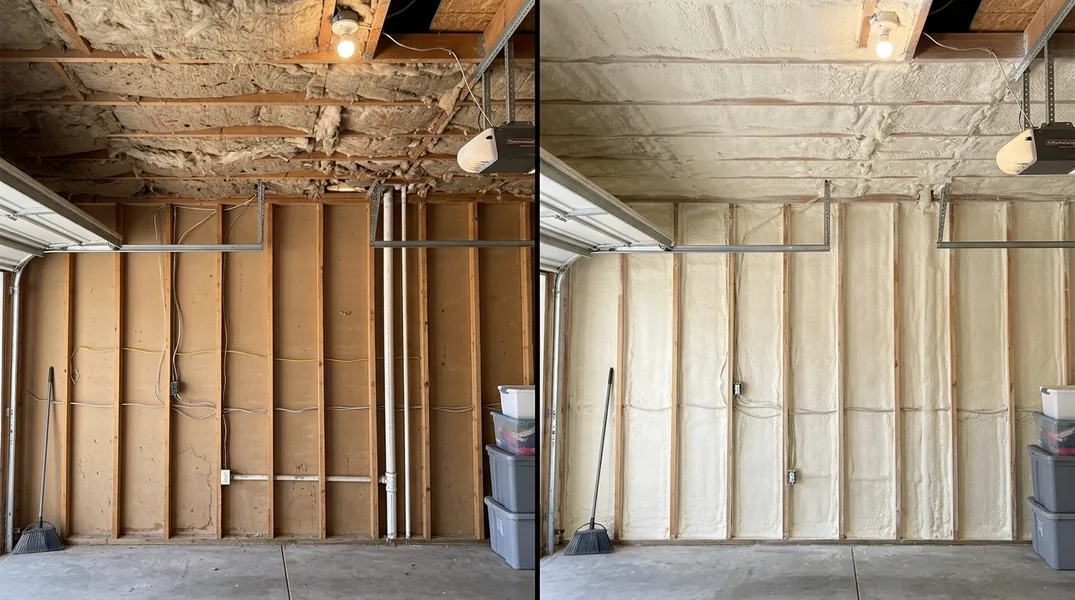
Why Lincoln's Extreme Weather Demands Superior Insulation
Living in Lincoln means preparing for some of the most unforgiving weather patterns in the Midwest. Winter temperatures regularly plummet below zero, while summer heat can exceed 95 degrees Fahrenheit. These extreme swings place enormous stress on your building's envelope, whether you own a traditional home, a metal structure, or a barndominium. Without proper insulation, your heating and cooling systems work overtime, driving energy costs through the roof and leaving you uncomfortable in your own space.
The challenge isn't just about staying warm or cool. It's about protecting your investment from moisture infiltration, condensation buildup, and thermal stress that can compromise structural integrity over time. Many homeowners and property owners in Lincoln discover too late that traditional insulation materials like fiberglass batts or cellulose simply cannot handle the rapid temperature fluctuations and moisture challenges that define our region. This is where modern spray foam technology becomes a game changer for your building's performance and longevity.
Metal Building Insulation: The Best Choice for Modern Structures
Closed Cell Spray Foam Insulation has become the industry standard for metal building insulation, and for good reason. Metal buildings, whether used for agricultural storage, commercial operations, or residential barndominiums, conduct heat and cold extremely efficiently, which means they lose conditioned air rapidly without proper insulation. The thermal bridging effect in metal structures is pronounced, making traditional insulation methods inadequate. Spray foam adheres directly to the metal surface, creating an air-tight seal that eliminates gaps and thermal bridges that plague conventional approaches.
The best insulation for metal building applications is one that provides both high R-value and an air barrier in a single application. Closed cell spray foam delivers an R-value of approximately 6.5 to 7.0 per inch, significantly outperforming fiberglass or mineral wool. Beyond the numbers, spray foam's closed cell structure resists moisture penetration and provides structural reinforcement to your metal panels. This means your metal building stays drier, more energy efficient, and structurally sound through decades of Lincoln's harsh weather cycles.
Pole Barn and Barndominium Insulation: Protecting Your Investment
Pole barns and barndominiums represent a substantial investment, whether you're storing valuable equipment or creating a unique living space. Open Cell Spray Foam Insulation offers an excellent solution for these structures, particularly when cost efficiency is a consideration. Open cell foam provides an R-value of approximately 3.5 to 3.6 per inch and excels at sound dampening and flexibility. For pole barn insulation applications where moisture control is less critical than in enclosed living spaces, open cell foam can deliver strong performance at a lower price point than closed cell alternatives.
However, for barndominium insulation where you're creating a climate-controlled living environment, many property owners opt for closed cell spray foam to achieve superior moisture resistance and higher R-values. The choice between open and closed cell depends on your specific application, budget, and local climate considerations. A professional assessment from Lincoln Spray Foam Insulation can help you determine the ideal approach for your pole barn or barndominium project. The key advantage of spray foam in either case is its ability to conform to irregular framing, seal around obstacles, and eliminate air leakage that would otherwise compromise your building's thermal performance.
Steel Building Insulation: Engineering Performance in Lincoln's Climate
Steel buildings face unique insulation challenges because metal is an excellent conductor of heat and cold. Without proper insulation, a steel building becomes an uncontrolled thermal environment where condensation forms on interior surfaces, energy costs skyrocket, and comfort becomes impossible to achieve. Closed Cell Spray Foam Insulation directly addresses these challenges by creating a continuous thermal and air barrier across all steel surfaces, including purlins, girts, and other structural members that traditional insulation cannot effectively cover.
The superior performance of spray foam in steel buildings stems from its ability to create a monolithic insulation layer with no thermal bridging. When you apply spray foam to the interior of steel panels and framing, you eliminate the temperature differential that causes condensation. This is critical in Lincoln, where winter humidity levels and temperature swings create perfect conditions for moisture problems. Steel building insulation with spray foam also provides added structural rigidity, reduces noise transmission, and can improve the building's ability to withstand wind loads, which is particularly valuable given our region's exposure to strong winter and spring winds.
How Spray Foam Handles Lincoln's Winter Moisture and Summer Heat
One of the most significant advantages of spray foam insulation is its inherent moisture resistance. During Lincoln's cold winters, warm indoor air naturally wants to migrate toward cooler exterior walls. If that air reaches a cold surface without proper insulation, it condenses into liquid water, creating an ideal environment for mold, rot, and structural decay. Closed cell spray foam's impermeable structure prevents this moisture migration, keeping your building's interior dry and healthy regardless of outdoor conditions. In summer, the same barrier prevents humid outdoor air from infiltrating your building and overwhelming your air conditioning system.
Attic Spray Foam Insulation is particularly valuable for managing seasonal temperature extremes. Attics are notorious for temperature swings, with summer temperatures potentially reaching 150 degrees or more, while winter conditions expose the attic to outdoor cold. Spray foam insulation in your attic creates a thermal buffer that stabilizes interior temperatures, reduces strain on HVAC equipment, and prevents ice damming in winter by maintaining consistent roof temperatures. The air sealing properties of spray foam are especially critical in attics, where air leakage accounts for a significant portion of energy loss in many homes.
Spray Foam Insulation Cost in Lincoln: What to Budget
When evaluating insulation options, cost is naturally a primary consideration. Spray foam typically costs more per square foot than traditional insulation materials, but the long-term value proposition often justifies the initial investment. The superior R-value per inch means you need less material to achieve your target insulation level. More importantly, the air sealing benefits reduce your heating and cooling costs immediately and continuously over the life of your building. Many property owners in Lincoln find that energy savings pay back their spray foam investment within five to ten years, after which the savings accumulate as pure profit.
The actual pricing for your spray foam project depends on several factors, including the size of the area being insulated, the type of foam (open or closed cell), the complexity of the application, and current material costs. A metal building insulation project will have different cost considerations than attic spray foam or pole barn insulation. Rather than guessing at costs, the best approach is to contact Lincoln Spray Foam Insulation at (531) 229-1733 to discuss your specific project and receive a detailed free estimate. Our team can help you understand the cost per square foot, the expected energy savings, and the return on investment for your particular situation.
Choosing the Right Insulation Partner Near Me: What to Look For
Not all spray foam insulation contractors are equal. When selecting a company to handle your metal building, barndominium, pole barn, or attic insulation project, you want a partner with deep local experience, proper licensing and insurance, and a commitment to quality workmanship. Lincoln Spray Foam Insulation brings years of experience serving homeowners and property owners throughout the region, with a thorough understanding of how local weather patterns affect building performance. We use high-quality materials, employ trained technicians, and stand behind our work with professional warranties.
The right insulation contractor will take time to assess your building, understand your goals, and recommend the most appropriate solution rather than simply pushing the most expensive option. Whether you need Wall & Injection Foam Insulation for existing structures, new construction spray foam installation, or a comprehensive energy audit to identify problem areas, Lincoln Spray Foam Insulation provides professional guidance and expert installation. Don't leave your building's comfort, energy efficiency, and structural integrity to chance. Call (531) 229-1733 today to schedule your consultation and take the first step toward year-round comfort and lower energy bills.
Looking for a professional spray foam insulation contractor in Lincoln? Lincoln Spray Foam Insulation responds fast for all your spray foam insulation needs.
Get a Free Quote