Why Basements in Country Club and South Lincoln Need Superior Insulation
Homeowners in Lincoln, particularly those in the Country Club and Near South neighborhoods, face unique basement challenges. These established areas often feature full foundations built decades ago, when insulation standards were far less rigorous than today. Basements in these communities are prone to moisture infiltration, temperature fluctuations, and energy loss that can drive up heating and cooling costs significantly.
When you're evaluating insulation options for your basement, the stakes are higher than you might think. A poorly insulated basement can lose as much heated air in winter as an uninsulated attic. The difference between choosing the right insulation material and settling for a standard solution can mean hundreds of dollars in energy savings each year, plus improved comfort and protection against moisture damage. This is why many Lincoln homeowners are turning to spray foam solutions that deliver superior performance compared to traditional alternatives.
Spray Foam vs Blown In Insulation: Which Performs Better in Basements?
The comparison between spray foam and blown in insulation is fundamental when planning a basement project. Blown in insulation, typically made from cellulose or fiberglass, works by filling cavities with loose fibers. While this approach is affordable and can be installed quickly, it has significant limitations in basement environments. Blown in insulation settles over time, losing effectiveness and creating gaps where air can escape. More importantly, it offers minimal air sealing properties, which means outside air continues to infiltrate around rim joists, band boards, and foundation cracks.
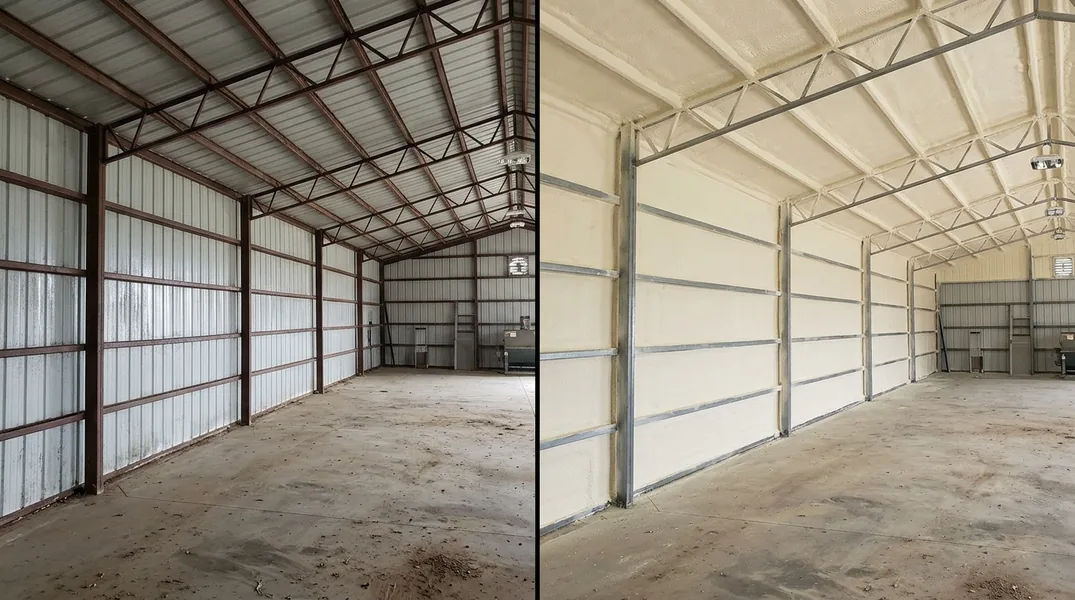
Closed Cell Spray Foam Insulation addresses these shortcomings directly. When applied to basement walls and rim joists, spray foam expands to fill every cavity and crack, creating an air-tight seal that blown in insulation simply cannot match. This air sealing capability is crucial in basements, where moisture and outside air are constant threats. Spray foam maintains its R-value indefinitely, never settling or degrading the way blown in materials do. For Country Club and Near South basements with full foundations, this performance difference translates to noticeably warmer winters, cooler summers, and significantly lower energy bills.
Spray Foam vs Fiberglass: Why Spray Foam Wins for Basement Applications
Fiberglass batts and rolls have been the standard basement insulation choice for generations, and their popularity is understandable given their low upfront cost. However, fiberglass has inherent limitations that make it poorly suited for basement environments. Fiberglass absorbs moisture readily, which means it can harbor mold and mildew in the damp basement conditions common to Lincoln homes. Additionally, fiberglass requires a vapor barrier to perform adequately, adding complexity and expense to installation. Even with proper installation, fiberglass batts leave gaps around electrical outlets, pipes, and framing members where air leaks occur.
Spray foam eliminates these problems entirely. Unlike fiberglass, spray foam is naturally moisture-resistant and does not support mold growth. It requires no separate vapor barrier because the foam itself acts as an effective moisture barrier. When spray foam is applied to basement rim joists and walls, it creates a continuous, seamless thermal envelope with no gaps or thermal bridges. This superior performance means your basement stays drier, warmer, and more comfortable year-round. For homeowners in Country Club and the Near South area dealing with older foundation construction, spray foam delivers the air sealing and moisture control that fiberglass simply cannot provide.
Best Insulation for Attic and Basement: Understanding the Difference
Many homeowners assume that the best insulation for attic spaces will also work well in basements, but this reasoning misses a critical distinction. The Attic Spray Foam Insulation approach focuses on preventing heat loss upward and managing attic ventilation, whereas basement insulation must contend with moisture, outside air infiltration, and foundation thermal bridging. Blown in cellulose or fiberglass works reasonably well in attics because attics are typically dry and ventilated. Basements, by contrast, are below grade and inherently susceptible to moisture.
This is why spray foam has become the preferred solution for both applications, albeit for different reasons. In attics, spray foam provides superior air sealing and eliminates the need for separate ventilation in many cases. In basements, spray foam's moisture resistance and air sealing properties are essential for long-term performance and durability. When you're insulating a full basement foundation in Country Club or Near South, you're making an investment that will last decades. Choosing spray foam ensures you get maximum performance, moisture protection, and energy savings from that investment.
Spray Foam vs Cellulose: Moisture Resistance and Durability in Basements
Cellulose insulation is an eco-friendly option made from recycled paper, and it appeals to environmentally conscious homeowners. However, cellulose shares fiberglass's critical weakness in basement applications: it absorbs moisture. In fact, cellulose is even more hygroscopic than fiberglass, meaning it actively pulls moisture from the air and can retain it for extended periods. In a basement environment, this characteristic creates ideal conditions for mold, mildew, and structural decay. Additionally, cellulose requires chemical fire retardants and can settle significantly over time, reducing its insulating value by 10 to 20 percent within the first few years.
Open Cell Spray Foam Insulation and closed cell spray foam both outperform cellulose in basement settings. While open cell foam is more permeable than closed cell, it still resists moisture absorption far better than cellulose and maintains its R-value indefinitely. Closed cell foam is the optimal choice for basements because it provides both superior insulation and a complete moisture barrier. For Lincoln homeowners with full foundation basements in established neighborhoods, spray foam eliminates the moisture concerns that plague cellulose and ensures your basement investment delivers reliable performance for decades to come.
Getting Your Free Estimate for Basement Spray Foam in Lincoln
If you own a home in Country Club, Near South, or anywhere else in Lincoln and you're ready to upgrade your basement insulation, the first step is understanding your specific needs and budget. Every basement is different. Some may need full foundation wall insulation, while others require targeted rim joist sealing and air gap filling. The best way to determine the right approach for your home is to schedule a professional assessment with Lincoln Spray Foam Insulation.
Our team will evaluate your basement's current condition, identify air leaks and moisture issues, and recommend the most cost-effective spray foam solution for your situation. We can discuss pricing options and answer all your questions about performance, durability, and energy savings. Contact us today at (531) 229-1733 or visit our website to request your free estimate. We serve all of Lincoln and surrounding areas, and we're ready to help you transform your basement into a comfortable, energy-efficient space that adds real value to your home.
Looking for a professional spray foam insulation contractor in Lincoln? Lincoln Spray Foam Insulation responds fast for all your spray foam insulation needs.
Get a Free Quote