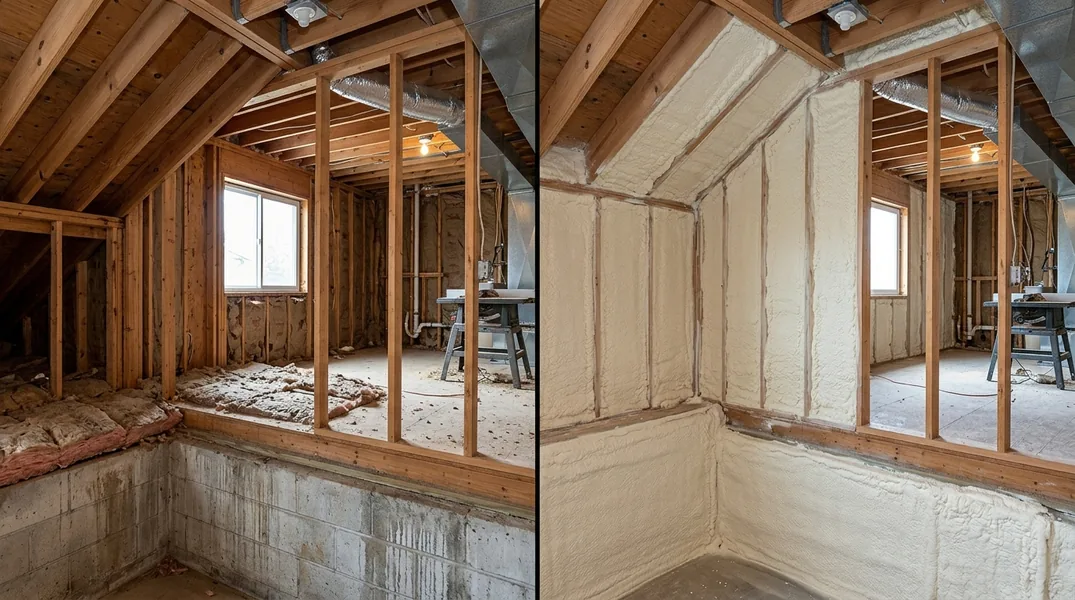
Understanding Spray Foam Attic Insulation Types
When it comes to insulating your attic, attic spray foam insulation has become one of the most effective solutions available to homeowners in Lincoln. However, not all spray foam is created equal. The two primary types, open cell and closed cell, offer distinctly different performance characteristics, and understanding these differences is crucial for making an informed decision about your home's insulation needs.
Spray foam insulation works by expanding when applied, filling gaps and creating an air-tight seal that traditional fiberglass batts simply cannot match. This expansion is what makes spray foam so effective at reducing energy loss and improving comfort. However, the density and structure of the foam varies significantly between open cell and closed cell varieties, leading to meaningful differences in R-value, moisture resistance, and cost. For homeowners in Lincoln dealing with the region's temperature fluctuations and humidity levels, choosing the right type is essential.
What Is Open Cell Spray Foam Insulation?
Open Cell Spray Foam Insulation has a lower density structure where the cells are not completely closed off from one another. This creates a softer, more flexible foam that expands significantly during application. Open cell foam typically achieves an R-value of around 3.6 to 3.8 per inch, making it a solid insulator at a lower cost point than its closed cell counterpart. The material is also vapor permeable, which means moisture can pass through it, making it particularly useful in certain climate conditions.
One of the primary advantages of open cell foam is its affordability. Homeowners looking for effective insulation without the premium price tag often find open cell to be an attractive option. Additionally, open cell foam is excellent at sound dampening, which can be a significant benefit if you're concerned about noise transfer in your home. However, open cell foam is not ideal as a moisture barrier and can absorb water if exposed to significant moisture. This characteristic makes it less suitable for below-grade applications or areas prone to standing water, though it works well for most attic applications where proper ventilation exists.
What Is Closed Cell Spray Foam Insulation?
Closed Cell Spray Foam Insulation features a denser structure where the cells are completely enclosed, creating a rigid, high-performance insulation material. This type of foam achieves an R-value of approximately 6.0 to 6.5 per inch, nearly double that of open cell foam. The superior R-value means you need less thickness to achieve your desired insulation level, which can be advantageous in attics with height constraints or specific structural considerations.
The closed cell structure also provides excellent moisture resistance and can act as an effective vapor barrier, making it ideal for creating what professionals call a sealed attic insulation environment. This moisture resistance is particularly valuable in humid climates or areas where water intrusion might be a concern. Additionally, closed cell foam provides superior structural support and can even contribute to the rigidity of your roof assembly. The trade-off is cost. Closed cell foam typically costs significantly more per board foot than open cell, though the superior performance and durability often justify the investment for homeowners prioritizing long-term energy efficiency and protection.
Unvented Attic Spray Foam: Creating an Unvented Attic Space
One of the most compelling reasons to choose spray foam for your attic is the ability to create what's known as an unvented attic spray foam system. Traditional attics rely on ventilation to manage temperature and moisture, but spray foam allows you to seal the attic envelope completely, bringing the attic into the conditioned space of your home. This approach can significantly improve energy efficiency and comfort while reducing strain on your HVAC system.
When spray foam is applied to the underside of the roof deck in an unvented configuration, it creates an air-tight seal that prevents conditioned air from escaping into the attic and then to the outdoors. This is particularly effective in climates like Lincoln's, where heating and cooling demands are substantial. An unvented attic also eliminates the temperature extremes that traditional vented attics experience, which can extend the life of your roofing materials and reduce thermal stress on your home's structure. Both open cell and closed cell foams can be used for unvented attics, though closed cell foam's superior moisture resistance makes it the preferred choice for maximum performance and peace of mind.
Attic Spray Foam Insulation Cost in Lincoln: What to Budget
Understanding the financial investment required for spray foam insulation is essential for most homeowners. The pricing for attic spray foam insulation varies based on several factors, including the size of your attic, the type of foam selected, the desired R-value, and current market conditions. Open cell spray foam typically ranges from approximately $0.50 to $1.00 per board foot, while closed cell foam generally costs between $1.00 and $2.00 per board foot. For an average attic in Lincoln, open cell installations might cost between $1,500 and $3,500, while closed cell projects typically range from $3,000 to $7,000 or more.
While these figures might seem substantial, it's important to consider the long-term return on investment. Spray foam insulation can reduce your heating and cooling costs by 15 to 30 percent, depending on your home's current condition and your climate control habits. Many homeowners recoup their investment within five to ten years through energy savings alone. Additionally, improved comfort, better moisture control, and extended roof life add value beyond simple energy bill reduction. To get an accurate estimate tailored to your specific attic and goals, contact Lincoln Spray Foam Insulation at (531) 229-1733 or request a free estimate online. Our team can assess your situation and provide transparent pricing for both open cell and closed cell options.
Which Type Is Right for Your Lincoln Home?
The choice between open cell and closed cell spray foam ultimately depends on your specific priorities, budget, and home conditions. If you're primarily focused on cost-effectiveness and your attic doesn't have significant moisture concerns, open cell foam offers excellent value and adequate insulation performance. It's a practical choice for many Lincoln homeowners who want to improve energy efficiency without the premium investment. However, if you prioritize maximum R-value, superior moisture resistance, and the ability to create a fully conditioned attic space with a vapor barrier, closed cell foam is the superior choice despite its higher upfront cost.
Consider factors such as your current energy bills, the age of your roof, local humidity levels, and your long-term plans for your home. If you're planning to stay in your home for many years, the superior performance and durability of closed cell foam may make more financial sense. Conversely, if you're looking for a cost-effective improvement that will still provide meaningful energy savings, open cell foam is a solid option. The best approach is to consult with professionals who understand Lincoln's climate and can evaluate your specific attic conditions. Lincoln Spray Foam Insulation has the expertise to recommend the right solution for your home and help you make a decision that aligns with your needs and budget. Call us today at (531) 229-1733 to discuss your attic insulation options.
Looking for a professional spray foam insulation contractor in Lincoln? Lincoln Spray Foam Insulation responds fast for all your spray foam insulation needs.
Get a Free Quote